"A Different Moment" between Lebanon and Syria... Bisat: An opportunity to build a new relationship
16:43 · 23 September 2026
15 min read
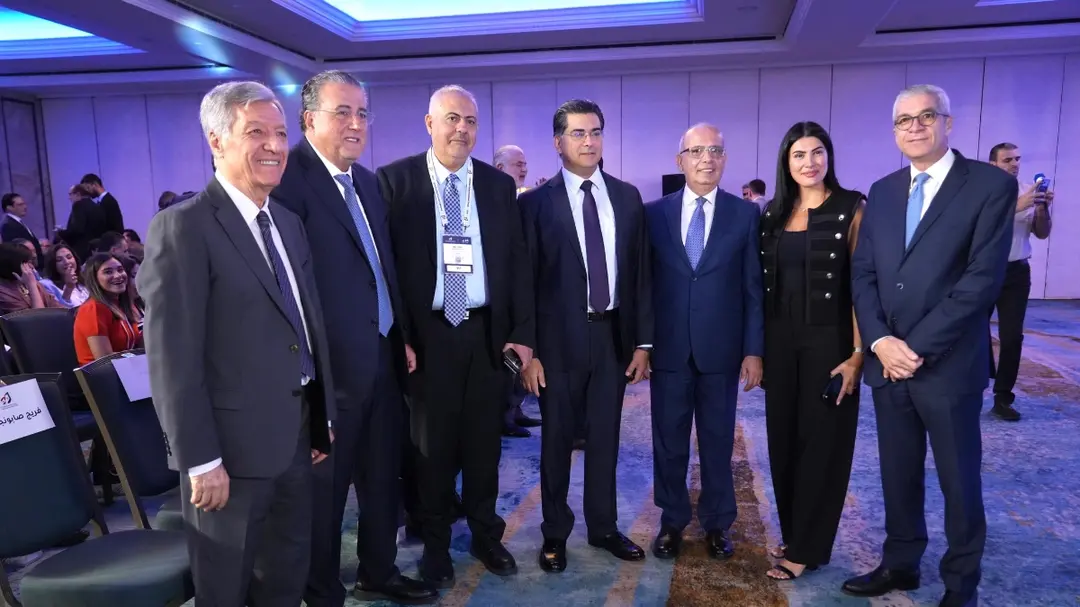
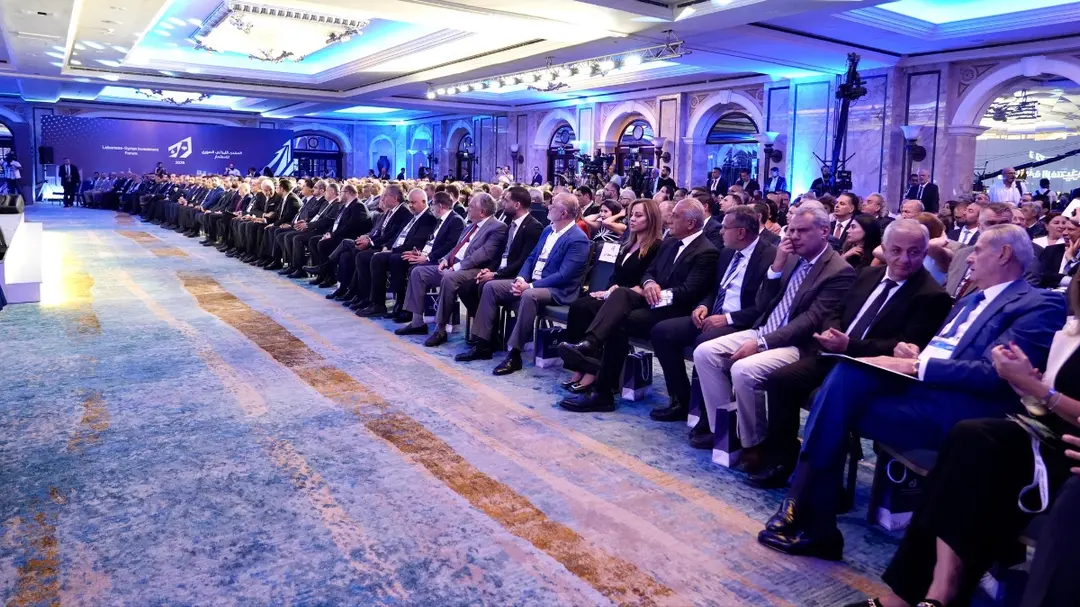
President General Joseph Aoun, represented by Minister of Economy and Trade Dr. Amer Al-Bissat, inaugurated the proceedings of the Lebanese-Syrian Investment Forum, held under his patronage before noon today at the Phoenicia Hotel in Beirut, in the presence of Minister of Information Lawyer Dr. Paul Morcos, Minister of Tourism Laura Al-Khazen Lahoud, Syrian Minister of Economy and Industry Mohammad Nidal Al-Shaar, Minister of Works and Transport Fayez Rassamny, Minister of Agriculture Nizar Hani, Syrian Minister of Agriculture Engineer Bassel Sweidan, Minister of Industry Joe Issa El-Khoury, Minister of Technology and Artificial Intelligence Dr. Kamal Shehadeh, Syrian Minister of Health Dr. Moussab Nazal Al-Ali, Syrian Minister of Tourism Mazen Al-Salkharni, Syrian Minister of Transport Dr. Engineer Yarob Badr, founder of the "Lebanese-Syrian Forum" initiative Ahmad Hashemieh, Chargé d'Affaires at the Syrian Embassy in Lebanon Iyad Al-Hazza, President of the Economic Bodies and former Minister Mohammad Choucair, President of the Federation of Syrian Chambers of Industry Dr. Mazen Derwan, President of the Lebanese Investors Association Jacques Sarraf, Director of Development and Planning at the Syrian Sovereign Fund Yasser Qahf, Head of the Syrian Investment Authority Rawan Ramadan, Chairman of the Board and General Manager of the Investment Development Authority of Lebanon (IDAL) Dr. Majed Mneimneh, Managing Partner of Bridge Point Company in Syria and the UAE Wassim Qadmani, Assistant Syrian Minister of Planning and Institutional Excellence Ibrahim Al-Adman, Head of the General Civil Aviation and Air Transport Authority in Syria Omar Hisham Al-Housari, Chairman of the Board and General Manager of the Port of Beirut Marwan Al-Nafi, Assistant Syrian Minister for Emergencies, Disasters, and Institutional Efficiency Dr. Hussam Al-Hallaq, President of the Syrian-Lebanese Business Council Dr. Leila Al-Samman, alongside representatives of economic bodies, chambers of commerce and industry, private sector institutions, investors, and specialized experts.
Zwein
Following the Lebanese and Syrian national anthems, media personality Marianne Zwein delivered a speech welcoming the attendees and introducing the speakers.
Hashemieh
Then, the founder of the "Forum Initiative," Ahmad Hashemieh, spoke, welcoming the attendees and noting that this is the "first edition" of the Forum. He said: We meet today, not merely to launch a new conference, but to launch an economic track that we want to endure and transition from ideas to partnerships, investments, and projects.
I have always believed that building the future begins with building bridges, and I have always been present in building bridges of goodwill and ties within Lebanon, across its regions, institutions, and people. Today, we take a step further, transcending borders to seek economic integration between Lebanon and Syria—a solid bridge, unshaken by animosities, based on mutual interests, trade, investment, expertise, and growth opportunities.
Hashemieh considered that we are "before a delicate and important economic moment," saying: Syria is working on transitioning to the recovery and rebuilding phase, and Lebanon is facing the repercussions of the war and awaiting its turn for recovery and revival. Circumstances may differ, but there is an inescapable reality: geography has forged a deep economic interdependence between the two countries.
He added: What we are seeking today is not a relationship between two capitals, but an economic partnership extending from every region in Lebanon to every region in Syria, to move on to Arab countries and the world. The history and geography of Syria and Lebanon carry a clear message.
Doors in cities were gateways for people and trade, roads connected the interior to the coast, and markets mapped out the ties between regions. Today, we must redefine this geography in the language of modern economy.
Borders can be crossing points, ports can be platforms for growth, infrastructure can transform into an economic network, and geographical location can become a competitive advantage. "Some people might say Ahmad Hashemieh is dreaming," but frankly, after what we have witnessed over the past two years, nothing is impossible anymore, and this is the first time in the history of the relationship between Lebanon and Syria that we witness an initiative for the sake of the two peoples.
He pointed out that all the titles of the Forum bear the names of both countries, meaning, God willing, "we will recover together." The titles are: "Lebanon and Syria in the New Economic Map of the Middle East, Financing the Economy of the Future, Restoring Confidence, Reconstruction, Sustainable Development, and Developing Transport, Ports, and Regional Market Integration." He added, retracting slightly: "However, the economy we are building today is not the economy of yesterday. We are entering a new era where artificial intelligence, digital transformation, knowledge economy, and technology are redefining production, investment, and the labor market." Hence, rebuilding must not only mean restoring what was destroyed, but building an intelligence-driven, highly connected, and more competitive economy. In this context, Lebanon and Syria can develop a true integration between capital, expertise, resources, and markets, turning the challenges imposed by reality into new economic opportunities.
He stressed that "the Lebanese-Syrian Investment Forum is not an event that ends with the conclusion of its proceedings; it is a track that started today and will continue, because recovery requires investment, investment requires trust, and trust requires genuine partnerships and mutual interests." He said:
We want meetings to turn into projects, projects into investments, and investments into jobs, growth, and added value, and for economic cooperation between Lebanon and Syria to become part of a broader regional economic movement.
Hashemieh concluded: Today we open a new door, or rather what could be the door to the future of Syria and Lebanon, in the language of investment, partnership, innovation, and growth.
Al-Shaar
Then, Syrian Minister of Economy and Industry Mohammad Nidal Al-Shaar delivered a speech stating "that the first Syrian-Lebanese Investment Forum represents an opportunity to transition economic relations between Syria and Lebanon from a relationship dictated by geography to a partnership based on will and mutual interests," stressing the need to build them on clear and balanced foundations, with full respect for the sovereignty of both countries, the independence of their decisions, and the interests of their peoples.
Al-Shaar noted "that the importance of the forum transcends the economic aspect, as building mutual interests can form a sustainable path for building trust between the two countries," pointing out "that history, geographical proximity, and relations between the two peoples are well-known and deep, but what is required is to redefine economic relations on clear and balanced institutional foundations."
Al-Shaar noted "that the participating Syrian government delegation in the forum is the largest Syrian government delegation to visit Lebanon since liberation," explaining "that geographical proximity alone does not create economic integration; rather, it requires clear rules, reliable institutions, effective crossings, banks that finance trade, companies that invest, and capital capable of calculating risks," affirming that the time has come to transition to a partnership forged by will and mutual interests.
Al-Shaar pointed out "that Lebanon possesses points of strength in services, business, education, health, entrepreneurship, and a wide network of businesspeople around the world, while Syria possesses a large market and an expandable production base in agriculture and industry, and a geographical location granting it a land extension towards regional markets, in addition to a wide network of Syrian businesspeople in the region and the world."
Al-Shaar clarified "that the years of the Syrian revolution pushed thousands of Syrians into new markets, where they established companies, built relationships, and gained expertise, transforming survival requirements in many cases into Syrian economic, commercial, and cognitive assets distributed across multiple markets."
Al-Shaar considered "that combining well-established Lebanese networks with Syrian networks formed over past years, and linking them to production, investment, and markets inside and outside both countries, can create a network of business, production, and trade extending from the Mediterranean to regional and global markets."
He affirmed "that developing the relationship with Syria provides the Lebanese private sector with a close market, a land extension towards the region, and opportunities in production, investment, services, and logistics, while a stable and open Lebanon constitutes an outlet, expertise, business network, and services complementing Syria's production capacities."
He pointed to "the possibility of developing joint value chains in transport, ports, logistics, agriculture, food industries, tourism, health, and technology," stressing that integration does not mean either country abandoning its advantages, but rather increasing their value through linkage with the other party's advantage.
Al-Shaar explained "that the new Syrian economic model is based on a free economy, competition, and private sector partnership, while the state's role lies in regulation, enablement, and protecting competition, rather than replacing or competing with the investor."
He noted "that Syria is working on developing the legislative and institutional environment, reforming the financial and banking sector, enhancing governance, transparency, and compliance, and improving the investment environment, enabling the expansion of areas of cooperation with Lebanon in services, marketing, distribution, market access, investment, and production."
Al-Shaar concluded: "An economically strong Syria is in Lebanon's interest, and an economically stable and prosperous Lebanon is in Syria's interest," not on the basis of one country depending on the other, but through relations that make each party stronger independently and within the framework of partnership, calling not to reproduce the old relationship, but to build a new economic relationship worthy of the sovereignty of both countries, their capabilities, and the future of their peoples.
Al-Hazza
Then, the Chargé d'Affaires at the Syrian Embassy in Lebanon, Iyad Al-Hazza, delivered a speech, pointing out that "we meet today to write a new page between two twin siblings through hard work and courageous vision. Syria and Lebanon are not merely two countries on the map; they are a single body and an inseparable geographical and historical artery." He said: We all know that politics and economics are two sides of the same coin called "stability and prosperity. Today, our region stands before a pivotal moment forcing us to transition from managing crises to manufacturing opportunities.
Al-Hazza considered that "wise politics paves the way for the economy, and a strong economy protects political decision-making and grants it independence and dignity." He said: "The investment partnership between our countries is not an option we possess for experimentation, but an existential necessity. Integration between Lebanon's service and logistics capabilities and Syria's massive potential in reconstruction, industry, and energy is the true locomotive for comprehensive economic renaissance."
Al-Hazza added: "Our two countries have weathered fierce storms, but two peoples who love life do not know defeat. Just as cedars stand tall after storms and the Ghouta blooms after drought, we meet today to build bridges of mutual interests that cannot be shaken by changes. A strong Syria is a prop for Lebanon, and a prosperous Lebanon is a window for Syria."
He concluded: "Let us make our day a turning point, to transition from the geography of proximity to the geography of partnership. History does not wait for the hesitant, and our hands are extended to build a tomorrow worthy of the sacrifices of our peoples and the dreams of our youth."
Al-Bissat
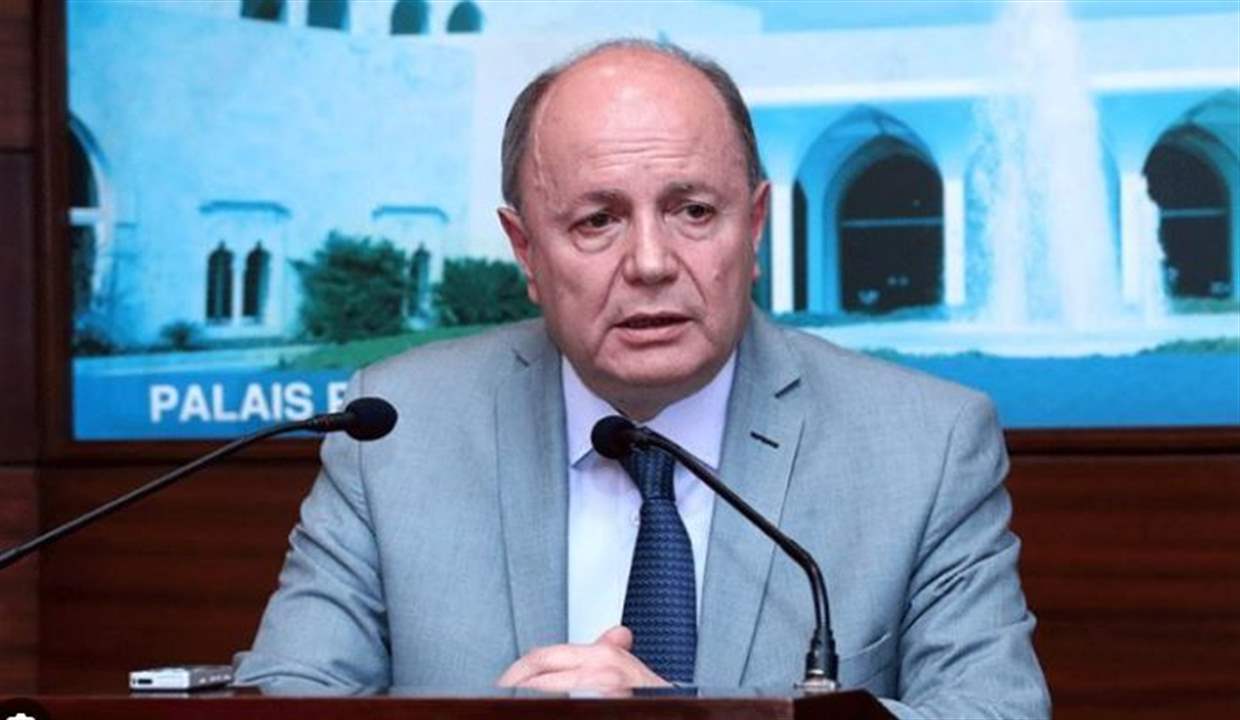
Then, Minister of Economy Amer Al-Bissat delivered a speech on behalf of the forum's patron, President General Joseph Aoun, saying:
Our friends and brothers arriving from Syria, welcome to Beirut.
It is my honor to represent in this forum the President of the Lebanese Republic, General Joseph Aoun, and to convey to you His Excellency's greetings and wishes for the success of this gathering, and for further stability, cooperation, and prosperity in Lebanese-Syrian relations.
The convening of this forum today carries significance that transcends economy and investment. We are facing a different moment and an opportunity to establish a new relationship between our countries, clearer and more balanced, based on respect for each other's sovereignty, good neighborliness, and mutual interests.
He added: Building the future does not mean ignoring the past. The relationship between Lebanon and Syria carried many ties, as well as experiences that left their mark on both peoples. What is required is to draw lessons from them and look forward: How do we turn the geography uniting us from a forced reality into an opportunity? And how do we build an economic relationship where Lebanon's success is in Syria's interest, and Syria's success is in Lebanon's interest?
This is the vision expressed by His Excellency President Joseph Aoun, and affirmed by Prime Minister Nawaf Salam. From Damascus, we also heard a will to open a new page with Lebanon, headlined by stability, development, and economic cooperation.
During our meeting with His Excellency President Ahmad Al-Sharaa, the message was clear: the economy must be a fundamental bridge in building this relationship.
Al-Bissat continued: The new page needs substance. It specifically needs functioning institutions, clear interests, and results from which both peoples benefit. Therefore, I would like to pause here at three main ideas:
First - Transitioning from intentions to institutions and from institutions to implementation
Over the past months, we have begun important steps:
● The joint Lebanese-Syrian Higher Committee was established, chaired by the Prime Minister on the Lebanese side and His Excellency Foreign Minister Asaad Al-Shaibani on the Syrian side, providing a more regular and sustainable framework for cooperation between the two states. We are currently reviewing and discussing more than forty agreements and protocols between the two countries.
● We have established technical coordination mechanisms between concerned ministries and administrations, and we are working on files directly affecting economic movement between the two countries: border crossings, truck movement, transit, standards and testing, trade restrictions, transport, and the movement of businessmen and businesswomen.
● We launched the Lebanese-Syrian Business Council to directly coordinate between the private sectors of the two countries, because we are convinced that the foundation of the Lebanese-Syrian relationship stems solely from the private sector.
In the past, our relationship often bypassed institutions. Our new relationship must be stronger through institutions.
Second - Transitioning from problem-solving to manufacturing opportunities
Facilitating trade movement and removing obstacles are essential, but our ambition must transcend increasing the volume of exports and imports between the two countries.
We must ask: What can Lebanese and Syrians produce together? In which sectors can they invest together? And how can they access regional and global markets together?
This question gains additional importance in light of the transformations witnessed by the global economy. Trade maps in our region are being redrawn, opening a strategic opportunity for Lebanon and Syria.
Al-Bissat digressed: The coronavirus pandemic exposed the fragility of long supply chains. Trade wars and rising tariffs pushed countries and companies to diversify their sources, markets, and trade routes. The recent war and disruptions in regional maritime corridors increased shipping costs and risks, restoring credibility to internal land routes and multiple transport routes.
The ports of both countries can constitute essential gateways connecting the Mediterranean to land routes extending deep into the region. The value of these ports multiplies when connected to a modern and efficient network of roads, railways, and energy transport lines.
Hence, transport, transit, and infrastructure projects acquire a dimension exceeding the facilitation of bilateral trade. They open internal corridors, connect regional markets to one another, and grant Lebanon and Syria a role in newly forming trade networks.
Syria possesses a strategic location, a wide market, a production base, and constitutes a vital land corridor towards Iraq, the Gulf, Turkey, and other markets.
In contrast, Lebanon possesses its ports, private sector, professional and financial expertise, human energies, economic relations, and a wide diffusion network in the region and the world.
Combining these features can unlock major opportunities in industry, agriculture, food and pharmaceutical industries, energy, transport, logistics, tourism, technology, and professional services.
This is the shift we desire: from commercial exchange to joint projects and value chains, and from a geographical location we possess to an economic role we build together.
Third - Defining each party's responsibility in succeeding this vision
The role of governments is to clear the path for economic activity. We must remove obstacles, simplify procedures, lower trade costs, provide a clear and stable legal framework, ensure fair competition, and protect investor rights.
Meanwhile, the role of the private sector is grounded in discovering opportunities, building partnerships, mobilizing financing, and creating jobs.
Therefore, I tell the Lebanese private sector: Seriously study the opportunities available in Syria. Seek viable partners and projects. And inform us clearly of the obstacles, guarantees, and procedures you need.
We will work with our colleagues in the Syrian government to address these issues within the formal frameworks we have begun establishing.
And I tell our Syrian friends: Look at Lebanon as a partner in investment, services, expertise, and technology, and as a connecting link with capital, business networks, and foreign markets.
To the Arab and international investor, we say: If we combine the locations of both countries, their ports, crossings, human resources, and the capabilities of their private sectors, we can create economically and regionally significant projects.
Al-Bissat concluded: Lebanon wants a stable, secure, and prosperous Syria, because Syria's stability and prosperity are a Lebanese national interest. A stable and prosperous Lebanon is also in Syria's interest. We have a clear goal: to turn the location of our countries into a platform for production, trade, and investment, and to connect our ports to internal roads and regional markets.
The seriousness of this track will show in results: obstacles removed, projects launched, investments flowing, and jobs increasing.
Geography brought our countries together. Today, our responsibility is to make this geography work in our favor.
← Previous article
Following the death of Mohammad Hamzeh... Arrest of the stone-thrower at cars in Sabra